Don’t Skip Your RhoGAM Shot

There is no reason to skip your RhoGAM shot if it has been recommended for you during or after your pregnancy.

I’m kind of shocked that I am having to write about warning folks to not skip their RhoGAM shot.

“Prophylactic anti-D immune globulin should be offered to unsensitized Rh D-negative women at 28 weeks of gestation. Following birth, if the infant is confirmed to be Rh D positive, all Rh D-negative women who are not known to be sensitized should receive anti-D immune globulin within 72 hours of delivery.”

ACOG on Prevention of Rh D Alloimmunization

Unfortunately, like with the vitamin K shot, in addition to trying to scare new moms away from getting vaccines, they also tell them to skip their RhoGAM shot.

What is RhoGAM?

RhoGAM (RhIg) or anti-D immune globulin is not a vaccine.

A RhoGAM shot can help prevent hemolytic disease of the newborn and fetus.
A RhoGAM shot can help prevent hemolytic disease of the fetus and newborn.

It is a prescription immune globulin shot that is given to some pregnant and post-partum women to prevent Rh (Rhesus) immunization, which can lead to hemolytic disease of the fetus and newborn if you get pregnant again.

RhoGAM was approved by the FDA in 1968.

RhoGAM Questions and Answers

If you have been educated about RhoGAM on the Internet and are thinking about skipping your RhoGAM shot, it might be time for a little more research:

  1. What is hemolytic disease of the fetus and newborn (HDFN)? It is not to be confused with vitamin K deficiency bleeding, which can be prevented with a vitamin K shot. Also known as erythroblastosis fetalis, HDFN occurs when a mother develops antibodies against her baby’s own red blood cells and destroys them, leading to anemia, jaundice, and edema. In severe cases, this can be life-threatening and the baby can develop hydrops fetalis.
  2. Why would a mom develop these antibodies against her own baby’s blood in the first place? Since a baby’s blood type is determined by both their mom and dad’s blood type, it is easy to see how it might be different than moms. This usually isn’t a problem, after all, a mother’s immune system doesn’t usually attack any other cells of the placenta or her baby (immune tolerance of pregnancy) that might be “foreign.” Unfortunately, it is not uncommon for a baby’s blood and “foreign” red blood cells to mix with mom’s blood, which could trigger antibodies to form.
  3. How does a baby’s blood mix with mom’s blood? Doctor’s have long known that while mixing is not common during a women’s pregnancy, it can commonly occur when she gives birth, explaining how Rh disease used to kill 10,000 babies each year in the United States. It doesn’t take trauma, a procedure (amniocentesis or chorionic villus sampling), or a difficult delivery for a baby’s blood cells to leak into a mother’s bloodstream. It can just happen. Mixing can also happen after a miscarriage, an ectopic pregnancy, or an induced abortion. Simply trying to turn a baby from the breech to a head-down position before delivery (external cephalic version procedure) leads to fetal-maternal hemorrhage in 2 to 6% of cases.
  4. Who needs to get a RhoGAM shot? It is hopefully clear already that not everyone is at risk to develop Rh immunization and so not everyone needs RhoGAM. Some folks can safely skip their RhoGAM shot, but only because it would never have been recommended for them in the first place. You only need RhoGAM if your baby’s blood type might be different than yours, specifically the Rh D antigen of the blood  and if you (mom) are Rh D negative (Rh-negative). Why don’t we worry about the ABO part? While an ABO incompatibility can also cause hemolytic disease of the newborn, it is usually much more minor. Why don’t we worry if you are Rh-positive and the baby is Rh-negative? If your baby is Rh-negative, then he or she wouldn’t have any Rh antigens on their red blood cells to make antibodies against.
  5. What is the chance your baby will be Rh-positive? It depends. And is actually more complicated than people think. If dad is Rh-positive, he can be either +/- or +/+, because there are two alleles for the Rh gene and Rh-positive is dominant. So if mom is Rh-negative (she can only be -/-), then their baby could either be +/- or -/-, so has at least a 50% chance of being Rh-positive. On the other hand, if dad is definitely +/+, then there will be a 100% chance that the baby will be Rh-positive. If you are confused now, then you don’t want to think about how two Rh-positive parents can have a Rh-negative baby!
  6. When will I get my RhoGAM shot? The current guidelines are to get a RhoGAM shot at around the 28th week of pregnancy to prevent Rh sensitization for the rest of the pregnancy; within 72 hours after the delivery of an Rh-positive infant; after a miscarriage, abortion, or ectopic pregnancy; or after amniocentesis or chorionic villus sampling.
  7. Can I skip my RhoGAM shot? You can skip your RhoGAM shot if you are already Rh sensitized (because it’s too late and RhoGAM won’t help for any future pregnancies) or if you are Rh-positive.  You will know if you are already Rh sensitized because a blood test is done to check for Rh antibodies. When paternity is certain (you know who the father is), and the father is Rh-negative, you can also skip the shot you would get at 28 weeks.  You can also skip your RhoGAM shot if your baby is Rh-negative.
  8. How do you know if you are already Rh sensitized? Moms who are Rh-negative get an antibody screen to see if they have Rh antibodies when they are 28 to 29 weeks pregnant.
  9. Why do some women seem to safely skip their RhoGAM shot and have a healthy baby? Like with skipping a vitamin K shot or with skipping or delaying vaccines, the risk of a baby developing hemolytic disease of the fetus and newborn isn’t 100%, so these parents who skipped their RhoGAM shot gambled and got lucky their baby wasn’t harmed.
  10. But don’t they do it differently in other countries? Yes. In the UK, they routinely give all Rh-negative mothers either one dose of RhoGAM at 28-30 weeks or two doses, one at 28 weeks and another at 34 weeks. New mums will also get a shot after their baby is born if their baby is Rh-positive.

Don’t skip your RhoGAM shot if it has been recommended. If you do, you will have a 13-16% chance of becoming Rh sensitized, which can affect your next pregnancy.

RhoGAM Myths

But your OB/Gyn doctor gives you RhoGAM, so why is a pediatrician writing about it?

Because getting RhoGAM prevents hemolytic disease of the fetus and newborn. If you ever see, or hopefully just read about a baby with hydrops fetalis, you will understand why pediatricians don’t want you to skip anything just because of something you read on the Internet, especially myths like:

  • RhoGAM is a vaccine – not true. RhoGAM is made of antibodies. And while it is a blood product, it is extensively screened and tested for infections. Of course, you shouldn’t skip any of your pregnancy vaccines either, like your flu or Tdap vaccines.
  • RhoGAM contains mercury – not true. RhoGAM is thimerosal free.
  • You only need RhoGAM if you have been in a car accident – not true, at all. Again, even in a normal pregnancy, with a “gentle birth,” there can be mixing of blood. And it doesn’t take a lot of blood mixing. As little as 0.1ml of blood (keep in mind that a teaspoon is 5ml) can trigger Rh sensitization.
  • hemolytic disease of the fetus and newborn is easily treatable – not true. While it might be true for more minor ABO blood incompatibilities, it is not true for Rh disease. If a baby develops hydrops fetalis, they might need intrauterine fetal blood transfusions and an early delivery. After they are born, babies with hydrops fetalis will likely need blood transfusions (because of severe anemia), exchange transfusions (because of extreme levels of jaundice), medicines to manage heart failure, phototherapy, and will likely be on a ventilator to help them breath. And even in a modern NICU, babies with hydrops fetalis still die.
  • everyone is offered a RhoGAM shot as part of a Big Pharma profit ploy – not true. RhoGAM is only given to moms who are Rh-negative, and since 85% of people are Rh-positive, most are never offered RhoGAM.
  • you can just wait to see if you want to get the shot later – not true. If you are Rh-negative and skip the pregnancy dose, waiting until your baby is born to see if they are Rh-positive, you may have already become sensitized. Mixing of blood occurs during pregnancy in at least 12% of cases and that is not just with car accidents, procedures, or trauma. Before RhoGAM started to be used during pregnancy, instead of just after, almost 2% of moms still became sensitized. Although that might seem like a small number, when you consider that almost 4 million babies are born in the United States each year, it ends up being a lot of babies at risk for HDFN if moms start skipping their RhoGAM shots.
  • you can just skip the shot if you don’t want any more kids – not true. Want if you change your mind and decide you do want more kids or have a “happy accident.”
  • there are natural ways to prevent Rh-sensitization – not true.
  • Rhogam causes serious side effects – not true. Rhogam is safe and doesn’t cause autism or any of the other serious side effects that you might see listed on sites trying to scare you away from getting your shot.
  • “First time mothers do not need it. A dose at 28 weeks is unnecessary unless a test shows sensitization has already occurred.” – ridiculously untrue, but I included it to show what kind of advice you will find on some websites. First time mothers definitely could need it, if they are Rh-negative, so that they don’t become sensitized, and if they are already sensitized, a dose isn’t going to help them!

Again, don’t skip your RhoGAM shot.

What To Know About Getting a RhoGAM Shot

There is no reason to skip your RhoGAM shot if it has been recommended for you during or after your pregnancy.

More About Deciding To Get A RhoGAM Shot

That Black Box Warning on Vitamin K Shots

For most parents, avoiding the serious risk of vitamin K deficiency bleeding easily justifies their decision to get their baby a vitamin K shot, despite the presence of a black box warning.

Vitamin K is not a vaccine, but some parents who plan on skipping or delaying their baby’s vaccines, also choose to skip this shot.

Vitamin K Shots

Given soon after a baby is born, a vitamin K shot is the most effective way to prevent both early onset and late onset vitamin K deficiency bleeding.

“The vitamin K injection is also a supposed safeguard in case your car is involved in a car wreck on the way home from the hospital or birthing center with newborn in tow.”

The Healthy Home Economist on why you should Skip that Newborn Vitamin K Shot

Although vitamin K deficiency bleeding has never been very common, it is often fatal, and it has been known for almost 125 years that it is caused by a temporary lack of vitamin K in newborns and younger infants.

Can’t you just give babies oral vitamin K to prevent this bleeding?

While oral vitamin K can prevent early onset vitamin K deficiency bleeding, which might start from birth to when a baby is about two weeks old, it won’t prevent late onset bleeding, even if you give the recommend three doses on schedule over two months (as they do in some countries). Babies with late onset vitamin K deficiency bleeding might not have symptoms until after they are two weeks old, or as late as 5 or 6 months old, and it can only be prevented with a vitamin K shot.

Can’t you just avoid dropping your baby or getting into a car wreck if you skip the vitamin K shot?

While you will hopefully do that anyway, the truth is that we don’t know why some infants with vitamin K deficiency bleeding develop bleeding in their brains, as it usually isn’t any kind of big trauma.

In 2013, seven babies over a period of eight months had early and late vitamin K deficiency bleeding at the Monroe Carell Jr. Children’s Hospital at Vanderbilt University in Nashville.

Three of them required surgery to remove clots “out of their head” and may “have issues with seizure disorders and will have long-term neurological symptoms related to seizures and developmental delays.”

I don’t think any of them were dropped or were involved in car accidents on the way home from the hospital or birthing center.

All had refused to get their baby a vitamin K shot.

Why Do Parents Refuse Vitamin K???

So why do some parents choose to skip their baby’s vitamin K shot?

There are no toxic ingredients in your baby's vitamin K shot.
There are no toxic ingredients in your baby’s vitamin K shot.

Some parents simply think their baby doesn’t need it, especially if they have an uncomplicated, “gentle birth” at home. Of course that has nothing to do with whether or not your baby develops vitamin K deficiency bleeding days or weeks later. It also doesn’t matter whether or not you plan on getting your baby boy circumcised, although your pediatrician probably won’t do the circumcision if you skip the shot.

Other parents are worried about a possible link to leukemia and childhood cancer, an improbable link that was refuted way back in the 1990s.

And still others are worried about the mercury content of vitamin K shots. Or they are worried about other supposed “toxins” in the shot, that it is a synthetic version of vitamin K, or that the dose is too high.

“There is no evidence to suggest that the small amount of benzyl alcohol contained in Vitamin K1 Injection (Phytonadione Injectable Emulsion, USP), when used as recommended, is associated with toxicity.”

Vitamin K Package Insert

Why are they worried about these things?

Mostly because someone on the Internet told them to be worried about them, even though vitamin K shots are safe, are free of mercury and any other toxins you might really need to be concerned about, and the dose of synthetic vitamin K your baby gets in the shot will not cause an overdose.

Or they might be worried that their baby might get up to 100mcg/L of aluminum with each shot. Of course, since they are only getting 0.5ml with the shot, that only equals about 0.05mcg of aluminum! Although it is an extremely tiny amount, why is it even in there? It is not working as an adjuvant as some would propose (again, vitamin K is not a vaccine), but rather is likely just a byproduct of the manufacturing process. And you can be assured that your baby can quickly, and safely eliminate the small amount from their body.

“…several countries have reported a resurgence of late VKDB coincident with policies promoting the use of orally administered prophylaxis, even with multiple-dose regimens.”

AAP on Controversies Concerning Vitamin K and the Newborn

The shot (which works) is certainly safer than going to a compounding pharmacy for oral vitamin K (which won’t work to prevent all cases of late-onset vitamin K deficiency bleeding).

That’s right – oral vitamin K for babies isn’t even available in the United States.

That Black Box Warning on Vitamin K Shots

And then there is the black box warning in the package insert for vitamin K.

The package insert for vitamin K does include a black box warning, although these severe reactions are extremely rare in newborns who get a vitamin K shot to prevent vitamin K deficiency bleeding.

Why is it there?

It was found that people could have severe, life-threatening allergic reactions (anaphylaxis) if they got a large dose of vitamin K too rapidly through an IV. This type of dose would usually be given to patients with significant bleeding who were being treated with anticoagulants (anticoagulant reversal).

“Based on a review of the literature, use of parenteral vitamin K1 may result in severe hypotension, bradycardia or tachycardia, dyspnea, bronchospasm, cardiac arrest, and death. These reactions are most consistent with a nonimmune-mediated anaphylactoid mechanism. It appears that intravenous administration is more frequently associated with these reactions and occurs at an incidence of 3 per 10 000 doses of intravenous vitamin K1.”

Jamie N Brown on Characterizing the Severe Reactions of Parenteral Vitamin K1

This is not what happens when babies get their vitamin K shot though, although there is one non-fatal case report of anaphylaxis after a baby in Turkey got a vitamin K shot in 2014.

There are nearly 4 million births in the United States each year.

Almost all of them get a vitamin K shot very soon after they are born.

And yet there are no reports of anaphylaxis in the United States.

There are isolated case reports of anaphylaxis in newborns to other things, including antibiotics, hepatitis B immunoglobulin, total parenteral nutrition (TPN), and atracurium (used in anesthesia) – but not to vitamin K shots.

“Therefore the INTRAVENOUS and INTRAMUSCULAR routes should be restricted to those situations where the subcutaneous route is not feasible and the serious risk involved is considered justified.”

Vitamin K Black Box Warning

That’s why most parents don’t skip getting their baby a vitamin K shot. Or they come to regret the decision if they do.

“What it comes down to is that giving your child a shot of Vitamin K at birth is a small price to pay, especially when the cost of rejecting the shot can be severe brain injury and death. I can’t change what happened to Olive, but I can try to prevent it from happening to another baby.”

Olive’s Story

For most parents, avoiding the serious risk of vitamin K deficiency bleeding justifies their baby getting a vitamin K shot.

And that’s why vitamin K deficiency bleeding is so rare these days – at least among those babies whose parents didn’t choose to skip their vitamin K shot.

What To Know About That Black Box Warning on Vitamin K Shots

For most parents, avoiding the serious risk of vitamin K deficiency bleeding easily justifies their decision to get their baby a vitamin K shot, despite the presence of a black box warning.

More About That Black Box Warning on Vitamin K Shots

Save

Reducing the Risk of Hot Car Deaths

Look before you lock and learn other way to reduce your child’s risk of a hot car death.

Good Samaritan laws can offer protection if you help a child in a hot car in an emergency. Call 911 and get the child out of the hot car if you need to.

In the United States, about 37 children die each year in hot cars.

Few are left in the car intentionally.

About half are accidents. Parents who forgot that the child was still in the car.

Many of the deaths are kids who got into the car and couldn’t get out.

All are tragic.

Kids in Hot Cars

How can you forget a child in a car?

Especially a car that might heat up to the point that a child can quickly die inside?

Although many people find it unbelievable that it can happen, it happens just the same.

People, once they are out of their very rigid routine, forget to drop a child off at daycare or that their child is still in the car.

“On days when the ambient temperature was 72°F, we showed that the internal vehicle temperature can reach 117°F within 60 minutes, with 80% of the temperature rise occurring in the first 30 minutes.”

Catherine McLaren on Heat Stress From Enclosed Vehicles

And remember, it doesn’t even have to be that hot outside for a car to quickly heat up.

How Hot Car Deaths Happen

It’s easy to see how some hot car deaths happen.

These are the deaths that are borne out of parental negligence. The kids who are left in a car while their parents party or shop.

But then you have the story of the mom who forgot to drop off her 7-month-old – dad usually drops her off – and doesn’t notice that she is still in the car until she picks up her son at daycare after work.

Or the child forgotten in a car after a family returns home.

Some deaths occur at daycare – kids left on a bus or van.

And sometimes kids get trapped in a car that had been unlocked.

Reducing the Risk of Hot Car Deaths

To help reduce the risk of these tragic hot car deaths, it might help to:

  • never leave your child alone in any vehicle, not even for a minute
  • lock your car and secure the keys so that your kids can’t get into your car and play by themselves
  • check the inside (after checking nearby bodies of water) of nearby vehicles, including their trunks, when a child goes missing
  • make sure your daycare provider alerts you if your child doesn’t show up
  • place reminders in the back seat with your child, so that even if you forget to drop off your child on the way to work, you will notice once you get to work and gather your things
  • bring your kids inside the house before anything else, so that you are less likely to get distracted and forget them outside
  • have a designated watcher if you have a lot of kids, especially if they are in multiple cars, to make sure everyone gets inside and no one is left in the car
  • call 911 if you see a child alone in any vehicle and get them out as soon as possible if they are not responsive or they are in distress
  • push for automakers to include standard devices in all cars to prevent hot car deaths

Most importantly, remember that it can happen to anyone, so be extra careful when you break your routine and always “look before you leave” or lock your car.

What To Know About Hot Car Deaths

Look before you lock and learn other way to reduce your child’s risk of a hot car death.

More About Hot Car Deaths

Safe and Effective Sun Screens for Kids

Applying a generous amount of a water-resistant sunscreen that provides broad-spectrum SPF 15 to 30 sun protection at least 15 to 30 minutes before your child is going to be in the sun, reapplying every few hours, can help keep your kids safe in the sun.

One of the cardinal rules of summer is that you don’t let your kids get a sunburn.

While a really great rule, it misses that you also shouldn’t let them get a tan either, and the rule doesn’t just apply to summer.

How do they do it in Australia? Slip (on some sleeves) - Slop (on a lot of sunscreen) - Slap (on a hat) - Seek (shade) - and Slide (on your sunglasses).
How do they do it in Australia? Slip (on some sleeves) – Slop (on a lot of sunscreen) – Slap (on a hat) – Seek (shade) – and Slide (on your sunglasses).

That’s were sunscreen comes in. Slop it on.

Sunscreens for Kids

Are sunscreens safe for kids?

As with insect repellents, despite all of the warning about chemicals and toxins that you might read on the internet, the answer is of course they are. In fact, most sunscreens can even be used on infants as young as age six months. And it is certainly better than letting your kids get sunburned!

You do have to use them correctly though.

Choosing a Safe and Effective Sunscreen

Which sunscreen should you use?

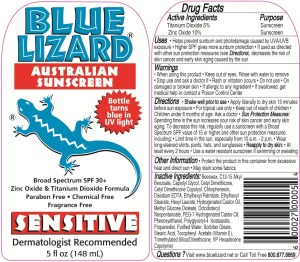
This Blue Lizard sunscreen includes Titanium Dioxide and Zinc Oxide, providing broad spectrum UVA and UVB protection.

Many parents are surprised that there are actually a lot of different ingredients in sunscreens, from Aminobenzoic acid and Octocrylene to Zinc Oxide.

While some are physical sunscreens (Titanium Dioxide and Zinc Oxide), others are chemical sunscreens. Some provide UVA protection, some UVB protection, and some offer both. And not surprisingly, some have become controversial, especially retinyl palmitate (vitamin A) and oxybenzone.

All are thought to be safe though.

Which is best?

When choosing a sunscreen, start with the fact that none should usually be used on infants under six months of age. Otherwise, choose the product (whatever the brand, to be honest, whether it is Banana Boat, Blue Lizard, Coppertone, Hawaiian Tropic, Neutrogena, or Target) best suited to your child’s needs, especially considering that:

  • sun tan lotion and tanning oil should be avoided
  • SPF 8 only blocks 87 percent of UVB rays and should be avoided
  • SPF 15 blocks 93 percent of UVB rays (minimum you should use)
  • SPF 30 blocks 97 percent of UVB rays (good for daily use)
  • SPF 50 blocks 98 percent of UVB rays (good for daily use)
  • SPF 50+ don’t offer much more UVB protection and may encourage folks to stay in the sun longer than they should, putting them at even more risk from UVA rays
  • a broad-spectrum sunscreen provides both UVA and UVB protection
  • even if your kids don’t go in the water, a sunscreen that is water-resistant might stay on better if they are sweating or get sprayed with water

In addition to the active ingredient and it’s SPF, you can now decide if you want a sunscreen that is in a spray, mist, cream, lotion, or stick. You can then pick one that is fragrance free, PABA free (of course), tear free, oil free (important if your kids have acne), for your baby or your kid playing sports, for someone with sensitive skin, or goes on dry.

Using a whipped sunscreen is just one of the newer ways to protect your kids from the sun's harmful rays.
Using a whipped sunscreen is just one of the newer ways to protect your kids in the sun.

Or would you like your child’s sunscreen whipped???

While parents and kids often seem to prefer spray sunscreens, do keep in mind the warnings about inhaling the spray and that some experts are concerned that they make it harder to apply a generous amount on your child. How much of the spray goes off in the wind? How much end up in an oily spot on the floor? If you use a spray sunscreen, follow the directions, rub it in, and don’t spray it in your child’s face. Also, don’t spray sunscreen on your child near an open flame.

Most importantly, you want to choose a sunscreen that will help you get in a good routine of using properly and using all of the time. Personally, I like all of the newer non-greasy lotions for kids and adults that have come out in the last few years. They are easy to apply, even in generous amounts, and work well.

Using Sunscreens on Kids

Now that you have chosen your sunscreen, be sure to use it properly.

“An average-sized adult or child needs at least one ounce of sunscreen (about the amount it takes to fill a shot glass) to evenly cover the body from head to toe.”

FDA

Do your kids still get burned or tanned despite using sunscreen? They aren’t immune to sunscreen. You are probably just making one or more common sunscreen mistakes, like not using enough sunscreen (start using a lot more), waiting until you’re already outside before applying it on your kids (you want to apply sunscreen at least 15 minutes before you go outside so that it has time to get absorbed into their skin), or not reapplying it often enough (sunscreen should be reapplied every few hours or more often if your kids are swimming or sweating a lot).

How long does a 6 or 8 ounce container of sunscreen last you? Remember that if you are applying an ounce before your kids go outside, reapplying it every few hours, and using it on most days (not just in the summer), then it shouldn’t last very long at all.

A layered approach to sun protection can help keep your kids safe in the sun.

For the best protection and to avoid mistakes, be sure to read the label and follow your sunscreen’s instructions carefully, and also:

  • encourage your kids to seek shade and wear protective clothing (especially hats, sunglasses, and UPF sun-safe clothing), in addition to wearing sun screen for extra sun protection
  • use sunscreen every time they go outside, even when it’s cloudy
  • reduce or limit your child’s sun exposure when UV rays are strongest, which is usually from about 10 a.m. to 2 p.m. (and all of the way to 4 p.m. in most areas), especially on days when the UV index is moderate or high and/or when there is a UV Alert in your area.

If you forget something, remember slip, slop, slap, seek, and slide.

Facts about Sunscreens and Sun Protection for Kids

Other things to know about sunscreen and sun protection for kids include that:

  • Waiting for improvements to sunscreen labels and new requirements for sunscreens? The FDA made their ‘big changes’ to sunscreens back in 2011. The main things that got left were the SPF cap and the rating system for UVA protection.
  • Tanning beds are not a safe alternative to getting a tan outside in the sun.
  • It is not safe to get a base tan. It won’t protect you from a sunburn and it increases your chance of future melanoma.
  • Still confused about how much sunscreen to use? Another handy rule is that a handful of sunscreen (fill to cover the palm of their cupped hand) should be a generous amount that’s enough to cover your child’s entire body. Since bigger kids have bigger hands, that should help you adjust the amount for different-size kids and as they get older.
  • Avoid combination sunscreen/insect repellent products. Use separate products instead, applying the sunscreen first and reapplying the sunscreen every few hours as necessary. Since you don’t typically reapply insect repellents (unless you are going to be outside for a really long time), if your child starts to get bitten, next time, you will likely need to consider using an insect repellent with a different active ingredient or at least one with a stronger concentration that might last longer.
  • SPF is only a measure of the sunscreen’s level of protection against UVB rays, but does say anything about UVA protection. A sunscreen that is labeled as being broad spectrum should protect against both UVA and UVB radiation.
  • According to the FDA, “SPF is not directly related to time of solar exposure but to amount of solar exposure.” What does that mean? While you can stay in the sun longer when protected with a sunscreen, no matter the SPF, it doesn’t tell you how long. Other factors, including the time of day, weather conditions, and even your location will help determine how quickly your skin will burn.
  • Sunscreens should be stored in a cool place and be thrown away after they expire. While it might be convenient, your car is not a good place to store your sunscreen.

Ready for some fun in the sun now? You sure you won’t come home with a sunburn or a dark tan?

What To Know About Sunscreens for Kids

Applying a generous amount of a water-resistant sunscreen that provides broad-spectrum SPF 15 to 30 sun protection at least 15 to 30 minutes before your child is going to be in the sun, reapplying every few hours, can help keep your kids safe in the sun.

More About Sunscreens for Kids

Get Control of Your Child’s Allergy Triggers

Identifying your child’s allergy trigger or allergy season won’t make them away. It can help you learn to avoid or control them though, or at least help get prepared by starting your child’s allergy medicines before he is exposed.

What’s triggering your child’s allergies and asthma?

Is it the cat?

The roses she loves to smell?

The dust on all of the stuffed animals in her room?

The Cottonwood tree blooming in the yard next door?

How do you know?

Identifying Allergy Triggers

Roses are not a common allergy trigger.

If your other kids are dog lovers, they are probably voting for the cat, but depending on the time of year, her pattern of symptoms, and where you live, there could be plenty of candidates.

One thing you can check off your list – the roses.

Allergies are typically caused by pollen from trees, grasses, and weeds – not other types of flowering plants, like roses, geraniums, or begonias, etc. These “allergy-friendly” plants don’t produce much pollen. Other plants with flowers that are said to be fairly non-allergenic include orchids, pansies, petunias, snapdragons, and zinnias, etc.

“Brightly colored flowers that attract bees and other insects or humming birds are generally not allergenic.”

Michael J. Schumacher, MB, FRACP, The University of Arizona

In general, plants with wind-borne pollen can trigger allergies.

Are your child’s allergies better after it rains? Since heavy rains can lower pollen counts in the air, that could be a hint to a seasonal allergy trigger.

What about when it is dry and windy? Does that make your child’s allergies worse? Since pollen is carried by the wind, a dry, windy day will likely mean that there is more pollen in the air, which is another hint to a seasonal allergy trigger.

Do your child’s year round allergies quickly get better when he is away from home for a few days or weeks? That could be a hint to something inside your house being a trigger, although if he traveled far away, to another area of the country, it could simply mean that he wasn’t exposed to the same pollen in the air.

Understanding Allergy Triggers

Year round, or perennial allergy symptoms, are likely caused by things inside your home.

If your child’s allergies only seem to be bad at very specific times of the year, then pollen from grasses, trees, or weeds could be the trigger. Which pollen is high in your area when your child’s allergy symptoms are acting up?

Allergy testing is always an option if your child’s allergies are hard to control, either skin testing or a blood test.

Indoor Allergens That Trigger Allergy Symptoms

Year round allergy symptoms can often be caused by things in your home:

  • Cat and dog dander
  • Dermatophagoides farinae and pteronyssinus (dust mites)
  • Mice (mouse allergens/mouse urine proteins)
  • Cockroach saliva, feces, and body parts (cockroach allergens)

While allergy testing can help you figure out which to blame, if you don’t have any indoor pets and can eliminate mold in the house, then maybe you can blame dust mites.

Weeds That Trigger Allergy Symptoms

Most people think of ragweed as the classic weed that can trigger seasonal allergies. Often described as being “packed with pollen,” each ragweed plant produces up to one billion pollen grains each season! These ragweed pollen grains are carried by the wind and can trigger allergy symptoms from early to mid-August through September and October – fall allergy season.

Others weeds that commonly trigger allergies include:

  • nettle
  • mugwort
  • Russian thistle (tumbleweed)
  • plantain
  • Rough marsh elder
  • Rough pigweed
  • Sheep sorrel

Again, if necessary, allergy testing can help you figure out to which weed your child is allergic, but if their allergies peak in the fall, it is likely triggered by weeds.

Trees That Trigger Allergy Symptoms

Which trees are most likely to trigger allergy symptoms?

It depends on where you live, but in the spring, mountain cedar, pecan, elm, maple, birch, ash, oak, and cottonwood, are common offenders.

If you are allergic to tree pollen, you can expect symptoms in late winter to early spring.

Grasses That Trigger Allergy Symptoms

While many people don’t think of summer as a typical allergy season, that is actually when grass pollen is in the air.

Do you know which grasses are commonly grown in your area?

Bermuda grass, Timothy, Kentucky Blue, Johnson, Rye, or Fescue? Are your kids allergic to any of them? If so, their allergy symptoms will probably act up in the late spring and early summer.

Molds That Trigger Allergy Symptoms

Depending on where you live, molds can either cause seasonal symptoms (colder climates) or they can be a cause of year round symptoms.

And you can expect outdoor mold spore counts to be extra high when it is warm and humid.

Inside, mold grows best in parts of the house that are cool and damp, with common suspects including:

  • Cladosporium herbarum
  • Penicillium notatum
  • Alternaria alternata
  • Aspergillus fumigatus

Have you seen any of these names on your child’s allergy test results? Although it is considered part of our natural environment, you can keep mold from growing inside your home.

What To Know About Allergy Triggers

Identifying your child’s allergy trigger or allergy season won’t make them  away. It can help you learn to avoid or control them though, or at least help get prepared by starting your child’s allergy medicines before he is exposed.

More Information about Allergy Triggers

Safe and Effective Insect Repellents for Kids

When used properly, insect repellents are safe and effective and the best way to help your kids avoid getting eaten up by mosquitoes, chiggers, ticks and other things that like to bite kids.

While other measures are important too, insect repellents are typically the best way to protect your kids from biting insects and ticks.
While other measures are important too, insect repellents are typically the best way to protect your kids from biting insects and ticks. Photo by James Gathany.

As we become more and more aware of diseases that can spread from the bites of insects and ticks, it becomes important that we learn to protect our kids. Plus, itchy bites can turn into nasty scabs that your kids pick at over and over, leaving scars that might even get infected.

What should you do?

Insect Repellents for Kids

In addition to simply trying to avoid mosquitoes and ticks, which can be difficult, especially as your kids get older and spend more time outside, you should learn to protect them with insect repellents.

Are insect repellents safe for kids?

Despite all of the warning about chemicals and toxic pesticides that you might read on the internet, the answer is of course they are. In fact, many insect repellents can even be used on infants as young as age two months. And it is certainly better than your kids getting Chikungunya, Dengue, Lyme disease, Rocky Mountain Spotted Fever, West Nile, or Zika. Or MRSA from an infected bite.

You do have to use them correctly though.

Choosing a Safe and Effective Insect Repellent

If they are using the new EPA label, your insect repellent will tell you how long it will protect your kids against mosquitoes and ticks.
If using the new EPA label, your insect repellent will tell you how long it will protect your kids against mosquitoes and ticks.

Which insect repellent should you use?

Although traditionally insect repellents with DEET have long been “considered the best defense against biting insects,” the CDC has now said that some other DEET-free alternative insect repellents may work as well as lower dose DEET, including those with 2-undecanone, Picaridin, IR3535, oil of lemon eucalyptus, and 2% soybean oil.

Of course, that has led to a lot of new insect repellents on store shelves these days. And to a lot of confused parents trying to decide which is the best for their kids.

Don’t be one of them.

When choosing one of these insect repellents, start with the fact that none should be used on infants under two months of age and products containing oil of lemon eucalyptus should not be used on children under age three years. Otherwise, choose the product best suited to your child’s needs, especially considering that:

  • no protection insect repellents should be avoided (garlic, vitamin B1, bug zappers, insect repellent wristbands)
  • shorter protection insect repellents last about two hours (less than 10% DEET, essential oils, 2-undecanone)
  • medium protection insect repellents last about 3 to 4 hours (20% DEET, 7% Picaridin)
  • longer protection insect repellents last about 5 hours or more (24% DEET, 15% Picaridin)

In addition to the active ingredient and it’s strength (how long it lasts), you can now decide if you want an insect repellent that sprays on smooth and dry and isn’t greasy, has a light, tropical scent, or is unscented. Or instead of a spray (pump or aerosol), you can even choose insect repellent wipes or a lotion.

Do keep in mind that the CDC advises that products above 30% DEET reportedly do not provide any extra protection, although it doesn’t keep stores from selling sprays with as much as 100% DEET. For other products, those with higher concentrations of DEET aren’t necessarily stronger, they simply provide longer protection.

So if you are going for a walk around the neighborhood with your preschoolers, some good choices might be:

  • Avon Skin-So-Soft Bug Guard Plus Towelettes (IR3535)
  • BioUD Spray (2-undecanone)
  • Buzz Away Spray (Citronella oil)
  • Cutter All Family Spray (7% DEET)
  • Cutter Lemon Eucalyptus Spray
  • Cutter Natural Spray
  • Cutter Skinsations  (7% DEET)
  • OFF! FamilyCare II (5% Picaridin)
  • OFF! FamilyCare III (5% DEET)
  • OFF! FamilyCare IV (7% DEET)

There are many other brands too, including Sawyer, Repel, and discounted store brands from CVS, Target, and Walgreens, etc.

Using Insect Repellents on Kids

Now that you have chosen your insect repellent, be sure to use it safely.

That means reading the label and following the instructions carefully, being sure to:

  • only apply the proper amount of insect repellent to exposed skin or clothing
  • avoid applying insect repellent near your child’s eyes and mouth, on cuts, irritated skin, or under your child’s clothing
  • wash off the insect repellent when you return indoors
  • avoid spraying insect repellent inside your home or car, directly on your child’s face (apply to your own hands and then rub it on their face) and hands (they might rub their eyes or put their hands in their mouth), or allowing them to spray it on themselves
  • instead of insect repellent, consider using mosquito netting to cover your infant’s stroller or carrier when outside, and especially when in high risk parts of the world, using insecticide treated bed nets

It can also help to mosquito-proof your home and work to control mosquitoes and ticks where your child plays. And of course, have your child cover up and dress to avoid getting bit when possible, with long socks and clothing that covers their arms and legs.

Facts About Insect Repellents for Kids

Other things to know about insect repellents for kids include that:

  • Protect times can be different for protection against mosquitoes vs ticks.
  • IR3535, also known as Insect Repellent 3535, is a synthetic biopesticide (ethyl butylacetylaminopropionate). It was once only found in Avon Skin So Soft products, but can now be found in other brands too.
  • It is the chemical in oil of lemon eucalyptus, PMD or para-menthane-3,8-diol, that gives it pesticidal properties.
  • Avoid combination sunscreen/insect repellent products. Use separate products instead, applying the sunscreen first and reapplying the sunscreen every few hours as necessary. Since you don’t typically reapply insect repellents (unless you are going to be outside for a really long time), if your child starts  to get bitten, next time, you will likely need to consider using an insect repellent with a different active ingredient or at least one with a stronger concentration that might last longer.
  • Although available, insect repellent lotions are often harder to find in stores.
  • In addition more standard insect repellents, permethrin treated clothing is available.
  • Don’t be fooled by natural insect repellents that ‘smell amazing’ and say that they aren’t “full of chemicals.” They likely contain para-menthane-3,8-diol, ethyl butylacetylaminopropionate, or other chemicals. While they are DEET-free and some may be natural, they aren’t free of chemicals. And keep in mind that many natural insect repellents are non-EPA registered.
  • Call poison control (1-800-222-1222) if your child gets the insect repellent in their mouth or eyes or has a reaction.

Although they are the best protection, since insect repellents aren’t perfect, you should also learn how to remove ticks and the symptoms of mosquito and tickborne diseases.

Yet more protection options include the Dengue vaccine (not available in the US yet though) and preventative medications for malaria.

What to Know About Insect Repellents for Kids

When used properly, insect repellents are safe and effective and the best way to help your kids avoid getting eaten up by mosquitoes, chiggers, ticks and other things that like to bite kids.

More About Insect Repellents for Kids

Incubation Periods of Childhood Diseases

The incubation period or latency period is the amount of time between being exposed to a contagious disease and when you begin developing symptoms.

The incubation period or latency period is the amount of time between being exposed to a contagious disease and when you begin developing symptoms.

This is not the same as the contagious period or the time during which your child can get others sick.

Incubation Period

Depending on the disease, the incubation period can be just a few hours or can last for several months. Knowing the incubation period for a disease can help you understand if your child is still at risk of getting sick or if he is in the clear — whether he is exposed to someone with strep throat, measles, or the flu.

“The incubation period is the time from exposure to the causative agent until the first symptoms develop and is characteristic for each disease agent.”

CDC

It can also help you figure out where and when your child got sick. For example, if your infant develops chickenpox, a vaccine-preventable disease, you can’t blame it on your cousin who doesn’t vaccinate her kids and who was visiting just three days ago. The incubation period for chickenpox is at least 10 to 21 days. So your child who is too young to be vaccinated likely caught chicken pox from someone he was exposed to a few weeks ago.

As we saw in recent outbreaks of Ebola and measles, a diseases incubation period can also help you figure out how long an exposed person needs to stay in quarantine. After all, if they don’t get sick once the incubation period is over, then they likely won’t get sick and can be released from quarantine.

Incubation Periods of Childhood Diseases

The incubation period for some common diseases includes:

  • Adenovirus – 2 to 14 days, leading to a sore throat, fever, and pink eye
  • vomiting after exposure to Bacillus cereus, a type of food poisoning – 30 minutes to 6 hours (short incubation period
  • Clostridium tetani (Tetanus) – 3 to 21 days
  • Chickenpox – 10 to 21 days
  • Epstein-Barr Virus Infections (Infectious Mononucleosis) – 30 to 50 days (long incubation period)
  • E. coli – 10 hours to 6 days (short incubation period)
  • E. coli O157:H7 – 1 to 8 days
  • Fifth disease – 4 to 21 days, with the classic ‘slapped cheek’ rash
  • Group A streptococcal (GAS) infection (strep throat) – 2 to 5 days
  • Group A streptococcal (GAS) infection (impetigo) – 7 to 10 days
  • Head lice (time for eggs to hatch) – 7 to 12 days
  • Herpes (cold sores) – 2 to 14 days
  • HIV – less than 1 year to over 15 years
  • Influenza (flu) – 1 to 4 days
  • Listeria monocytogenes (Listeriosis) – 1 day to 3 weeks, but can be as long as 2 months (long incubation period)
  • Measles – 7 to 18 days
  • Molluscum contagiosum – 2 weeks to 6 months (long incubation period)
  • Mycobacterium tuberculosis (TB) – 2 to 10 weeks (long incubation period)
  • Mycoplasma penumoniae (walking pneumonia) – 1 to 4 weeks
  • Norovirus ( the ‘cruise ship’ diarrhea virus) – 12 to 48 hours
  • Pinworms – 1 to 2 months
  • Rabies – 4 to 6 weeks, but can last years (very long incubation period)
  • Respiratory Syncytial Virus (RSV) – 2 to 8 days
  • Rhinovirus (common cold) – 2 to 3 days, but may be up to 7 days
  • Roseola – about 9 to 10 days, leading to a few days of fever and then the classic rash once the fever breaks
  • Rotavirus – 1 to 3 days
  • gastrointestinal symptoms (diarrhea and vomiting) after exposure to Salmonella – 6 to 72 hours
  • Scabies – 4 to 6 weeks
  • Staphylococcus aureus – varies
  • Streptococcus pneumoniae (can cause pneumonia, meningitis, ear infections, and sinus infection, setc.) – 1 to 3 days
  • Whooping cough (pertussis) – 5 to 21 days

Knowing the incubation period of an illness isn’t always as helpful as it seems, though, as kids often have multiple exposures when kids around them are sick, especially if they are in school or daycare.

Conditions with long incubation periods can also fool you, as you might suspect a recent exposure, but it was really someone your child was around months ago.

More About Incubation Periods

Lead Test Warning

If your child is under age six years and “had a venous blood lead test result of less than 10 (µg/dL) from a test analyzed using a Magellan Diagnostics’ LeadCare analyzer,” then he or she needs to have a repeat lead test.

The FDA has warned about the potential for falsely low test results from certain lead tests.
The CDC and FDA have warned about the potential for falsely low test results from certain lead tests.

Has your child had a lead test in the past three years?

Then he might need to be tested again.

The FDA, CDC, and AAP are warning about a possible problem with lead tests that have been done on children since 2014.

FDA Blood Lead Test Safety Alert

Specifically, the FDA is warning about all four of Magellan Diagnostics’ lead testing systems, including their LeadCare, Lead Care II, LeadCare Plus, and LeadCare Ultra test, as they might “provide results that are lower than the actual level of lead in the blood.”

Your child is not affected if they:

  • are over 6 years old (as of May 17, 2017)
  • had a lead test done from a finger or heel stick (the warning is about tests done on blood drawn from a vein, like in their arm)
  • had a lead test done using a different, non-Magellan Diagnostics testing method
  • had a lead test that was higher than 10 micrograms per deciliter (as they would hopefully have undergone retesting and a look for possible sources of lead exposure in and around their home if it was over 10)

Where are these Magellan Diagnostics’ lead testing systems used? They are used in some doctors’ offices and clinics and in some laboratories that do lead testing.

“While most children likely received an accurate test result, it is important to identify those whose exposure was missed, or underestimated, so that they can receive proper care. For this reason, because every child’s health is important, the CDC recommends that those at greatest risk be retested.”

Dr. Patrick Breysse, PhD, CIH, director of CDC’s National Center for Environmental Health

The American Academy of Pediatrics is also “urging parents of children ages 6 and younger who received a venous blood test for lead (in which blood is drawn from the arm), to discuss with their child’s pediatrician whether a new test is needed.”

Risks for Lead Poisoning

Do we still need to worry about high lead levels and lead poisoning so long after lead was removed from paint and gasoline?

Tragically, yes.

It is estimated that children in at least 3 to 4 million households in the United States are still exposed to high lead levels.

Children are especially at higher risk if they:

  • live in a home built before 1978, with the risk increasing with the age of the home, especially if it was built before 1960
  • have family members, friends, or neighbors with lead poisoning
  • live in a community with high levels of lead poisoning in children or a possible source of lead contamination, like a lead smelter or battery recycling plant
  • have pica (eat non-food substances)
  • are exposed to alternative medicine that might be contaminated with lead
  • live with a family member that works has a hobby in the lead-industry

And the latest recommendations are that all children have a risk assessment for high lead levels when they are 6-12 months old and again at 18-24 months. Those at high risk, on Medicaid, or in high prevalence areas should be formally tested at those ages.

What to Know About the FDA Blood Lead Test Safety Alert

If your child is under age six years and “had a venous blood lead test result of less than 10 (µg/dL) from a test analyzed using a Magellan Diagnostics’ LeadCare analyzer,” then he or she needs to have a repeat lead test.

More About the FDA Blood Lead Test Safety Alert

Why Not Watch 13 Reasons Why?

Although you may have been warned about letting your kids watch 13 Reasons Why, know that the American Foundation for Suicide Prevention states that you shouldn’t “be afraid to have a conversation with your children about the Netflix series and the issues it raises.”

After a teenage girl's perplexing suicide, a classmate receives a series of tapes that unravel the mystery of her tragic choice.
After a teenage girl’s perplexing suicide, a classmate receives a series of tapes that unravel the mystery of her tragic choice.

My kids won’t be watching 13 Reasons Why, the new series on NetFlix about a teen who kills herself.

It’s not that I won’t let them. It has more to do that they don’t seem to watch anything that isn’t on YouTube.

Would I let them watch it? Sure. It is impossible to hide the fact that suicide is one of the leading causes of death among teenagers.

That should be the nationwide controversy that we are all talking about!

“Evidence shows that providing support services, talking about suicide, reducing access to means of self-harm, and following up with loved ones are just some of the actions we can all take to help others.”

The National Suicide Prevention Lifeline

Should you let your teen watch 13 Reasons Why? As it is rated TV-MA, they almost certainly shouldn’t watch it without supervision or support.

The 13 Reasons Why Controversy

By offering immediate counseling to everyone that may need it, local crisis centers provide invaluable support at critical times and connect individuals to local services.

Did your school send home a warning telling you to make sure your kids avoid the show?

How does that work? Even if they don’t watch it, they might have friends that do.

Whatever you decide, you should at least talk to your kids about it. They probably are already talking about it with their friends.

And see what other folks are saying to help you make your decision:

Keep in mind that while many folks have pitchforks out because of the series, the American Foundation for Suicide Prevention, the American School Counselor Association and the National Association of School Psychologists suggest using 13 Reasons Why as a teachable moment to initiate a helpful conversation about suicide prevention and mental health.

And that conversation can start even if your kids don’t watch the show.

Continue reading “Why Not Watch 13 Reasons Why?”

Treating Hard to Control Poison Ivy

While poison ivy isn’t contagious, it can make you miserable if you don’t learn to avoid it and treat poison ivy rashes properly with anti-itch creams and steroids.

Poison ivy growing on a tree, ready to give your kids a rash.
It is better to learn to avoid poison ivy than to get a rash and have to get it treated. Photo by Vincent Iannelli, MD

It is usually not hard to identify a child with a poison ivy rash, especially a classic case of poison ivy, which might include a child with a known exposure to poison ivy after a camping trip, hike in the woods, or day at the lake, who a few days later develops a red, itchy rash all over his body.

The problem is that many parents don’t remember the “known exposure,” especially if it is the child’s first poison ivy rash.

The Poison Ivy Rash

Aerial roots on the stems can help you identify poison ivy, and yes, they can trigger a rash too.
Aerial roots on the stems can help you identify poison ivy, and yes, they can trigger a rash too. Photo by Vincent Iannelli, MD

After exposure to the leaves, stems, or roots of a poison ivy plant, children develop symptoms of poison ivy within 8 hours to a week or so, including:

  • an intensely itchy rash
  • red bumps that often may be in a straight line or streaks, from where the poison ivy plant had contact with your child’s skin
  • a rash that appears to spread, mostly because the rash appears at different times depending on how big or small a dose of the urushiol oil that area of skin got, with the rash appearing first on the spots that got exposed the most
  • vesicles and blisters that are filled with fluid

Keep in mind that children exposed to poison sumac and poison oak, other members of the genus Rhus or Toxicodendron, can get these same symptoms that we generically refer to as poison ivy symptoms.

(Using medical terminology, these children develop rhus dermatitis or allergic contact dermatitis, an intensely pruritic, linear, erythematous, papulovesicular rash after exposure to the urushiol oil in poison ivy.)

Treating Poison Ivy

It seems like everyone has their favorite treatments for poison ivy.

These basic treatments for poison ivy are usually going to help control the itch, and might include:

  • oral antihistamines (Benadryl or Atarax)
  • modified Burow’s Solution
  • Calamine lotion
  • Aveeno oatmeal baths
  • over-the-counter or prescription topical steroid creams

Is that all you need?

While these treatments might provide temporary relief and might be enough for very mild reactions, those with more moderate or severe symptoms will likely require systemic steroids.

Does that mean a steroid shot?

That might be what your doctor suggests or what some parents request, but keep in mind that it might wear off too soon, leading your child’s poison ivy symptoms to flare up again (rebound rash). That’s why most experts recommend a longer, tapering course of oral steroids instead of a single shot. A steroid dose pack is also often avoided as treatment for poison ivy, as the dose might be too low and it typically doesn’t last long enough.

Since the poison ivy rash might not go away for as long as three weeks, getting treated with systemic steroids can be an especially good idea if you have a moderate or severe case.

Avoiding Poison Ivy

A classic poison ivy plant in the 'leaves of three, let it be' configuration.
A classic poison ivy plant in the ‘leaves of three, let it be’ configuration. Photo by Vincent Iannelli, MD

Since very few people are actually immune to poison ivy, it is best to learn to avoid getting exposed to it in the first place.

You can start with the old adage, ‘leaves of three, let it be,’ but you really have to look at a lot pictures of poison ivy to get good at avoiding it. And to be safe, learn to avoid the places where poison ivy grows – along tree lines, around lakes and ponds, along trails, and in wooden or wild areas, etc.

Or at least do your best to avoid the plants by wearing long pants, a shirt with long sleeves, and gloves, etc., to avoid skin contact even if you are around poison ivy while hiking, playing along a creek, or fishing near a lake.

What can you do if you have been exposed to poison ivy? If you can rinse the exposed area with rubbing alcohol, like within 10 minutes, then you might avoid a reaction. After that, the oil in poison ivy, urushiol, will likely be stuck and trigger a rash. Of course, you don’t want to be applying rubbing alcohol to a large area of your child’s skin though or allow your child to use it if they will be unsupervised. And be sure to wash it off afterwards.

Commercial products might be more useful (and safer) to help you avoid poison ivy reactions and  include:

  • Ivy Block – was an over-the-counter barrier lotion that was supposed to prevent poison ivy, but unfortunately, it isn’t being made anymore
  • Tecnu Original Outdoor Skin Cleanser
  • Tecnu Extreme Poison Ivy & Oak Scrub
  • Zanfel Poison Ivy Wash

Although it is best to use the products immediately, within 10 to 30 minutes after exposure to poison ivy, if used anytime before you get a rash, you might decrease your symptoms. And if you get lucky, you might not get any symptoms at all.

Myths and Facts About Poison Ivy

Would you recognize this is poison ivy? It will still trigger a rash...
Would you recognize this as poison ivy? It will still trigger a rash… Photo by Vincent Iannelli, MD

As common as poison ivy is, there are many myths and misconceptions about it, including that:

  • poison ivy is contagious (false) – scratching doesn’t spread poison ivy, although it may seem that way as the rash spreads to new areas over the days and weeks after being exposed. That’s only because some areas of a child’s skin that had less exposure to the poison ivy plant than others will get the rash later, not that they are continuing to spread it by scratching.
  • you can get poison ivy from your dog (true) – although not as common as direct contact with a plant, indirect contact, like if you touch the oil from poison ivy that got on your dog’s fur or on your clothing, could trigger a reaction
  • it is easy to spot poison ivy (false) – poison ivy plants are often found growing among other plants, can trigger reactions year round, even when they don’t have any leaves (the stems  and roots can trigger a reaction too), and even dead poison plants can trigger a reaction, which can make it extremely hard to simply use the ‘leaves of three, let it me’ advice to spot plants.
  • birds help spread poison ivy (true) – ever wonder why poison plants grow along tree lines? Birds and small mammals eat the poison ivy berries and then poop out the seeds, allowing new plants to grow wherever the birds commonly hang out, including tree lines, around lakes and ponds, and your garden.
  • it’s easy to get rid of poison ivy plants (false) – poison ivy plants are very persistent and can be hard to get rid of
  • goats like to eat poison ivy (true) – well, goats like to eat everything, but a goat in your yard will likely eat up all of the poison ivy plants.
  • it is easy to identify poison ivy (false) – many other plants mimic the ‘leaves of three, let it be’ pattern, like Virginia creeper and Boxelder
  • burning poison ivy plants is dangerous (true) – the oil that triggers the poison ivy rash can vaporize, meaning exposure to the smoke from a burning plant can cause severe reactions.

And remember that your pediatrician can be helpful if you think your child has poison ivy. (true)

What To Know About Hard to Control Poison Ivy

While poison ivy isn’t contagious, it can make you miserable if you don’t learn to avoid it and treat poison ivy rashes properly with anti-itch creams and steroids.

More About Hard to Control Poison Ivy